How to Dispose of Kitchen Knives Safely in the UK
How to Dispose of Kitchen Knives Safely in the UK
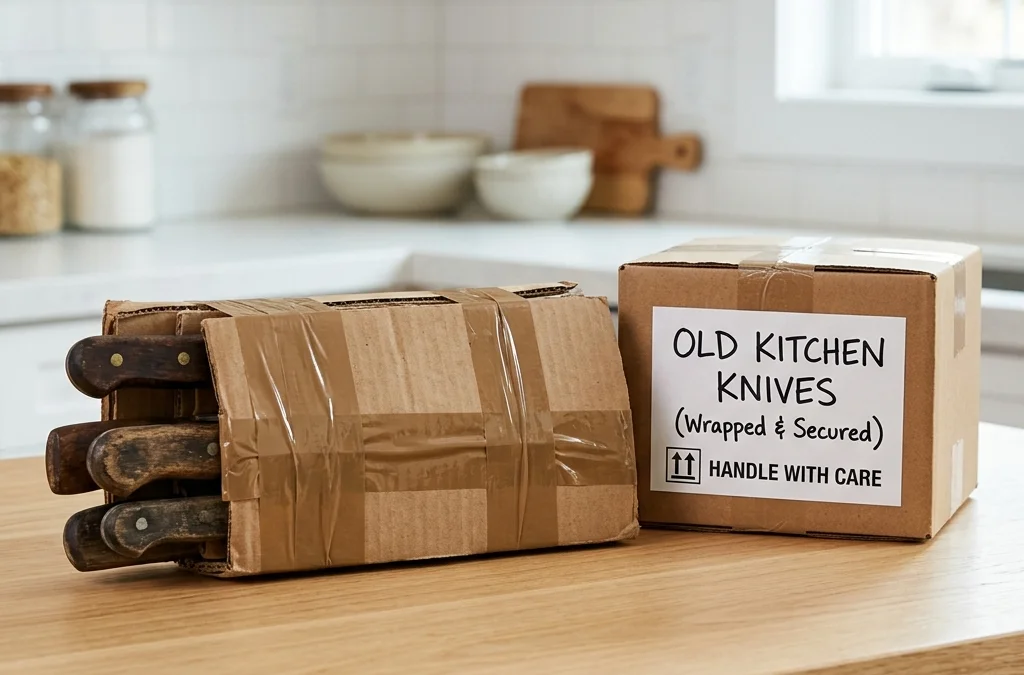
The safest way to dispose of kitchen knives in the UK is to take them to your local household waste recycling centre and place them in the scrap metal skip. You can also throw them in your general household waste bin only if the blade is heavily wrapped in thick cardboard, fully taped, and sealed in a puncture proof container labelled as sharp. Some police forces also offer knife amnesty bins for safe disposal.
Kitchen knives are a staple of every home, but when they become old, blunt, or damaged, getting rid of them poses a serious challenge. You cannot simply throw loose blades into your household waste because doing so places collection workers and the public at risk of severe injury. Understanding the legal, safe, and responsible methods for discarding blades ensures you stay within UK law while keeping your local community safe.
Can you throw old kitchen knives in the bin?
You can throw old kitchen knives in your general household waste bin, which is usually the black wheelie bin, but you must never place them in there loose. Loose blades can easily slice through plastic bin bags or push through the sides of plastic wheelie bins, creating a major hazard for refuse collectors. If you must use your household bin, you are required to use the secure wrap, seal, and label method.
It is critical to know that kitchen knives must never be put in your household kerbside recycling bins. Even though the blade is made of metal, home recycling bins are sent to sorting facilities where staff handle materials by hand. Placing a sharp knife in a recycling bin is highly dangerous and is strictly prohibited by councils across the country.
When it comes to general cutlery, the rules are slightly different. If you are throwing away standard butter knives, forks, or spoons, these can often go directly into your household waste, or you can take them to a scrap metal recycling point. Because standard cutlery does not possess a sharp cutting edge, it does not require the extensive cardboard wrapping that a chef knife or a utility knife needs, though keeping them bundled together is still recommended for safety.
Step by step: how to wrap a kitchen knife safely before disposal
If you decide to discard your knives using your household general waste wheelie bin, you must follow this safety wrapping method to protect the refuse collection staff.
- Wrap the blade: Cover the entire length of the blade in several layers of thick cardboard, folded newspaper, or heavy bubble wrap. Ensure the protective layers extend well past the sharp tip of the knife.
- Secure with tape: Use heavy duty packing tape, duct tape, or electrical tape to bind the wrapping tightly to the blade. Wrap the tape around the handle as well so the cardboard sheath cannot slip off.
- Double wrap the tip: Add extra tape and cardboard around the tip of the blade because this is the area most likely to pierce through packaging.
- Place in a container: Put the wrapped knife inside a puncture proof container, such as a thick plastic bottle, a plastic tub, or a secure metal tin.
- Seal the lid: Tape the lid of the container shut so it cannot be opened accidentally during transport.
- Label clearly: Write a clear warning on the outside of the container using a permanent marker, stating: “WARNING: SHARP KNIVES. CARE REQUIRED.”
- Position at the top: Place the container at the very top of your general waste wheelie bin, making sure the warning label is clearly visible when the bin lid is opened.
Taking knives to a recycling centre
Taking old blades to a household waste recycling centre is the method recommended by most local councils and UK police forces. This route is excellent because it ensures the steel is recycled and reused rather than sent to a landfill.
When you arrive at the recycling centre, look for the scrap metal skip. Because rules and layouts vary by facility, you should always hand the wrapped knives to a member of staff on site. They will direct you to the correct location or place the blades in the metal bin for you.
Before travelling, ensure you package the knives safely for the journey. Wrap them securely in cardboard and carry them in a sturdy box or bag inside your vehicle boot. You should also check your local council website to confirm their waste site accepts sharp items and to see if you need to book a vehicle slot before arriving.
Knife amnesty bins and police stations
Many police forces across the United Kingdom run knife amnesty schemes to remove unwanted blades from circulation. These schemes feature secure surrender bins placed in public spaces or outside police stations where anyone can drop off knives anonymously.
Using a knife amnesty bin is an excellent way to dispose of kitchen knives, especially if you have large cleavers, carving knives, or hunting blades that you do not feel comfortable putting in your domestic bin. This process supports community safety by ensuring these sharp objects never fall into the wrong hands.
Because the availability and locations of amnesty bins vary by local police force, you should check your local force website for up-to-date bin maps. If your area does not have a permanent amnesty bin, you can contact your local police station to ask if they accept handovers of domestic kitchen knives for destruction.
Finding disposal options near you: London, Birmingham, Manchester and Scotland
The laws and basic safety steps for discarding kitchen knives remain consistent throughout the country, but the specific locations where you can take them will vary.
- In London: The capital has numerous household reuse and recycling centres run by individual borough councils. Because space and vehicle access vary, check your specific borough website to find local metal recycling skips. Some London boroughs require booking a slot online before you can enter.
- In Birmingham: The city council operates several household recycling centres where scrap metal can be discarded. Ensure you wrap the blades fully and alert a site operator when you arrive.
- In Manchester: Greater Manchester has a large network of waste recycling sites. You should consult the Recycle for Greater Manchester database to locate the nearest scrap metal skip.
- In Scotland: Waste management is overseen by local authority councils, and sites across Scotland offer dedicated metal recycling services.
For all these locations, as well as rural areas, using online council directories is the easiest way to identify facilities near you.
Can you donate or sell old kitchen knives?
If your kitchen knives are still in usable condition, you might prefer to donate or sell them instead of throwing them away.
Charity shops are a common choice for donations, but you must call the shop to check their policy before visiting. Many charity shops refuse to accept sharp knives due to safety concerns for their staff and customers. If they do accept them, clean the knives thoroughly, wrap them in protective cardboard, and hand them directly to a manager at the counter.
If you plan to sell your knives, you must follow strict UK age laws. It is a serious criminal offence to sell or supply a knife to anyone under the age of 18. If you are selling knives online or in person, you must use a verified age verification process to confirm the buyer is an adult.
Another option for all-metal knives is selling them to a scrap metal merchant. Merchants will melt down the steel, ensuring the raw material is recycled into new products.
Should you sharpen your knives instead of throwing them away?
Before you decide to discard your kitchen knives, consider whether they can be restored. A blunt knife is not necessarily broken. With the right tools, you can easily restore a dull edge at home.
Using a sharpening steel, a pull-through sharpener, or a traditional whetstone can bring a blunt blade back to life. Regular sharpening saves you money on replacement cutlery and reduces the amount of household waste sent to recycling sites.
Disposal should be reserved for knives that are physically broken, have severely chipped blades, or have loose handles that cannot be repaired safely.
What UK law says about getting rid of knives
The UK has strict laws regarding the possession and carrying of blades in public places. When you are transporting old knives to a recycling centre, a police station, or a charity shop, you must ensure you comply with the law.
Under the Criminal Justice Act, it is an offence to carry a knife in a public place without a good reason. Transporting knives directly to a recycling centre or disposal point is considered a reasonable excuse, but you must ensure the blades are packed securely.
Always keep the knives wrapped in cardboard, seal them inside a sturdy box or bag, and place them out of sight in the boot of your car. Carry out the journey directly to the disposal point without making unnecessary stops in public areas. Never leave knives unattended in your vehicle or carry them loosely in your hand.
Broken, rusty or damaged knives
Even if a kitchen knife is snapped in half or covered in rust, it still poses a cut hazard. Broken knives must be wrapped using the same cardboard and tape method before being placed in the general waste or taken to a scrap metal skip.
Rust does not prevent steel from being recycled. Recycling centres melt scrap metal at extremely high temperatures, which refines the steel and removes impurities like rust. Therefore, taking rusty knives to the recycling centre is highly recommended over throwing them in the landfill bin.
Common mistakes to avoid
- Mistake: Putting loose kitchen knives directly into a wheelie bin. Reality: The blade can easily cut through the plastic bin or slice the hands of refuse collectors during collection.
- Mistake: Placing kitchen knives in the domestic green or blue recycling bin. Reality: Kerbside recycling bins are sorted by hand, and sharp knives represent a major safety hazard for facility workers.
- Mistake: Leaving old knives next to public street bins. Reality: This leaves dangerous items accessible to children or criminals, which is a serious legal offence.
- Mistake: Assuming charity shops will always accept kitchen knife donations. Reality: Most charity shops have strict bans on accepting knives for safety reasons, so you must call ahead.
- Mistake: Throwing away blunt knives without trying to sharpen them. Reality: Whestones or sharpening steels can easily restore most blunt knives, saving money and reducing waste.
People Also Ask
Can you put knives in a wheelie bin?
Yes, you can put knives in a general waste wheelie bin, but they must be heavily wrapped in cardboard and tape first. Never place loose knives in any domestic bin because they can puncture the plastic and injure refuse workers.
What bin can I put cutlery in?
Standard cutlery like forks and spoons can go in your general waste bin. However, sharp kitchen knives must never go in loose; they require secure wrapping or should be taken to a recycling centre.
Where can I get rid of my kitchen knives?
You can get rid of kitchen knives by taking them to the scrap metal skip at a household waste recycling centre, dropping them in a police knife amnesty bin, or wrapping them securely for your household general waste bin.
How do I find a knife amnesty bin near me?
You can locate a knife amnesty bin near you by visiting your local police force website. Many forces publish maps of surrender bins during safety campaigns.
FAQs
Are rusty or broken knives recyclable?
Yes. All-metal kitchen knives can be recycled in the scrap metal skip at your local recycling centre, where the steel will be melted down and repurposed.
Do councils collect knives with bulky waste?
No. Standard bulky waste collections do not cover sharp kitchen knives. You must either wrap them for your general waste bin or transport them to a recycling centre.
Can I post knives to a recycler or manufacturer?
Some premium knife manufacturers offer recycling programs, but you must use a secure courier service that includes age verification. You cannot send knives through standard postal services without complying with strict shipping restrictions.
Is it legal to sell old knives online?
Yes, but you must legally verify that the buyer is over 18 years of age. Most peer-to-peer selling sites have strict bans on listings for sharp blades.
Can knife blocks and wooden handles be recycled?
Wooden knife blocks and wooden handles should go in the general waste or wood recycling skip. If the handle is plastic, it must go in general waste as mixed plastics are not accepted in kerbside recycling.
Bottom line
Safely disposing of kitchen knives in the UK comes down to three main options: wrapping them heavily for your general waste wheelie bin, taking them to the scrap metal skip at your local recycling centre, or dropping them in a police surrender bin. Always ensure your blades are sheathed securely during transport to comply with UK knife carrying laws. Check your local council website to confirm their specific rules before disposing of metal items.
Mohsin Ali
Mohsin Ali writes UK-focused reviews, buying guides, and explainers covering trending gadgets, viral products, useful home finds, and everyday technology.
Related Reviews
How to Dispose of Kitchen Knives Safely in the UK
A complete step-by-step guide on how to dispose of kitchen knives safely in the UK, including general waste bins, scrap metal recycling, and knife amnesties.
Best Dog Lick Mat for Anxiety, Slow Feeding & Mental Enrichment
Discover why a dog lick mat is one of the best accessories for dog anxiety support, slow feeding, mental enrichment, and boredom relief.